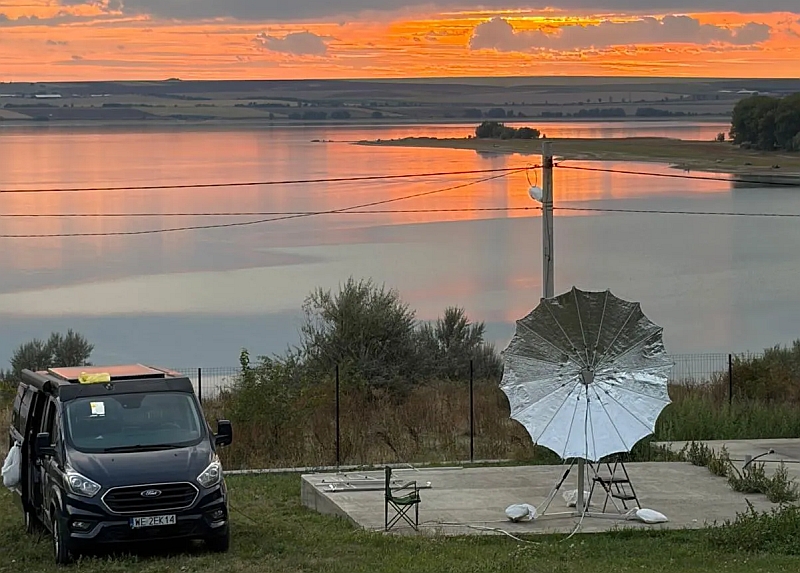
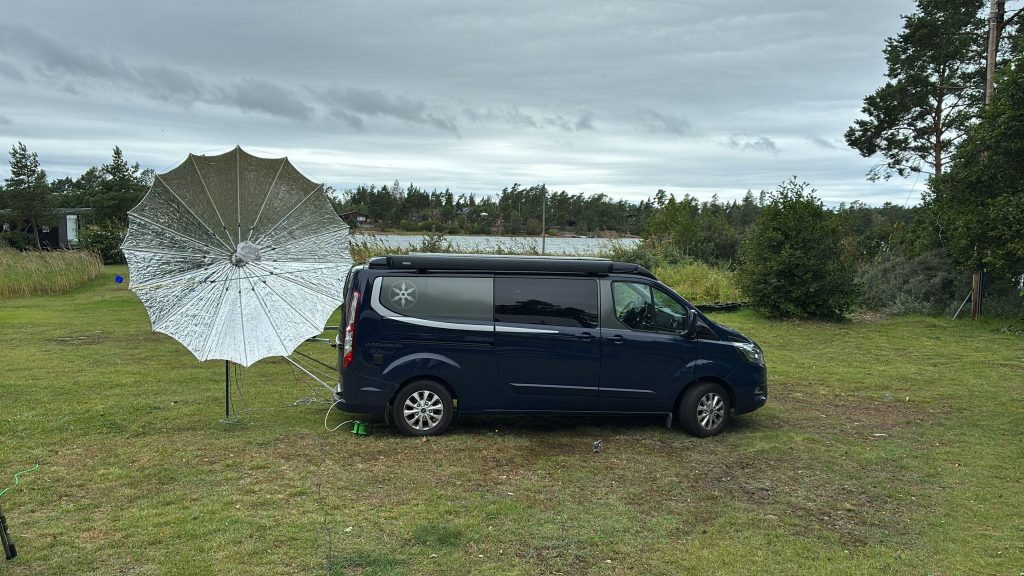
It has been less than four weeks since Alex (EA8DBM) activated Andorra on the 23cm band via EME using his portable station. After a three-day journey covering over 2,000 km, his current destination is Moldova. From there, he is active via the moon not only on 23cm but also on 2m and 13cm. Just minutes after he appeared on his usual frequency of 1296.100 MHz, I managed to make contact—marking another new country on the long road to the DXCC Award.
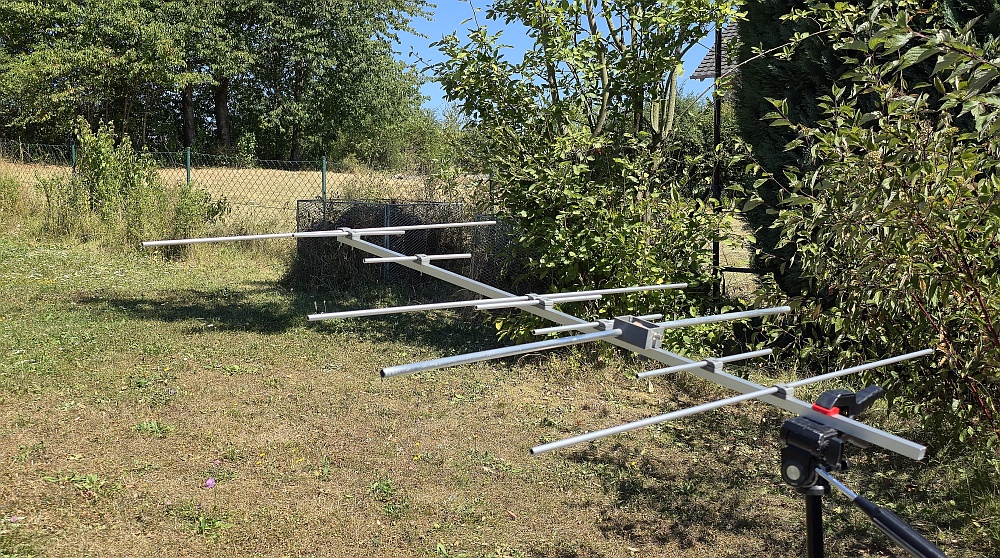
After receiving my new Icom IC-705, I needed a compact 2m/70cm dual-band Yagi antenna. I opted for a proven design by DK7ZB. Construction details and results can be found in the projects section.
What a fantastic weekend: Inspired by another DXpedition by Alex (EA8DBM), I returned to 23cm Moonbounce (EME) activity after a long hiatus caused by travel and a technical issue. This time, Alex wasn’t alone; he was in Andorra with other fellow hams. The goal was to activate the 2m, 70cm, 23cm, and 13cm bands via EME. After the initial pile-ups involving the “Big Guns,” I finally got my turn on August 08, and the contact was quickly logged. Now Andorra is confirmed on all Bands from 160m to 23cm. A big thanks to Alex for his neverending effort!
Just a few hours later that same day, Hamad (A71AW) appeared in the HB9Q chat. He has a home-built 3.2m dish and a BEKO power amplifier. A quick request for a test run, and things got underway. It was practically a formality, and the day was saved with a second new DXCC!
MeshCom 433 MHz is a low-power, long-range wireless communication system that operates in the 433 MHz band. It uses mesh networking, meaning each device (node) can relay messages for others, extending coverage without relying on a central infrastructure. This makes it useful in situations where internet or cellular networks are unavailable, such as outdoor adventures or emergency scenarios. The technology typically relies on LoRa (Long Range) modulation, which allows data to travel several kilometers while using very little energy. Devices in a MeshCom network can automatically find and maintain connections with nearby nodes, adapting dynamically as nodes move or drop out. Overall, MeshCom 433 MHz is valued for its resilience, low power consumption, and ability to create decentralized communication networks.
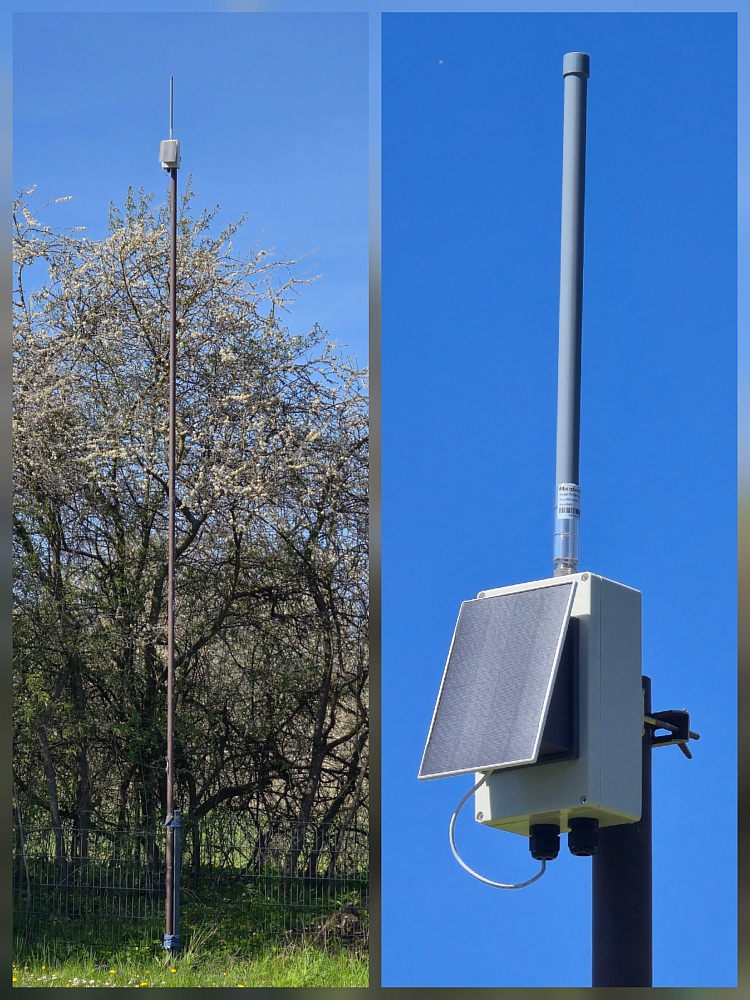
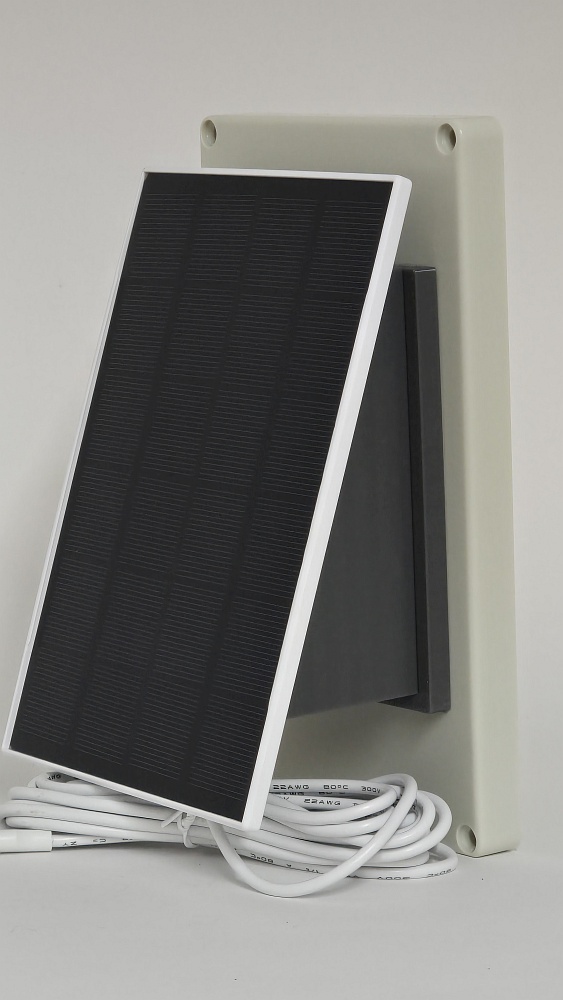
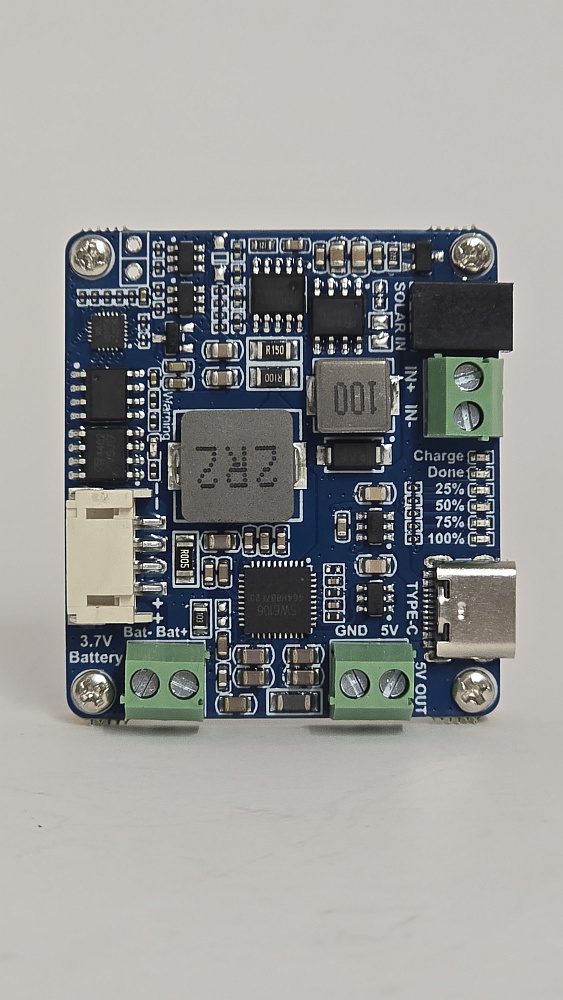
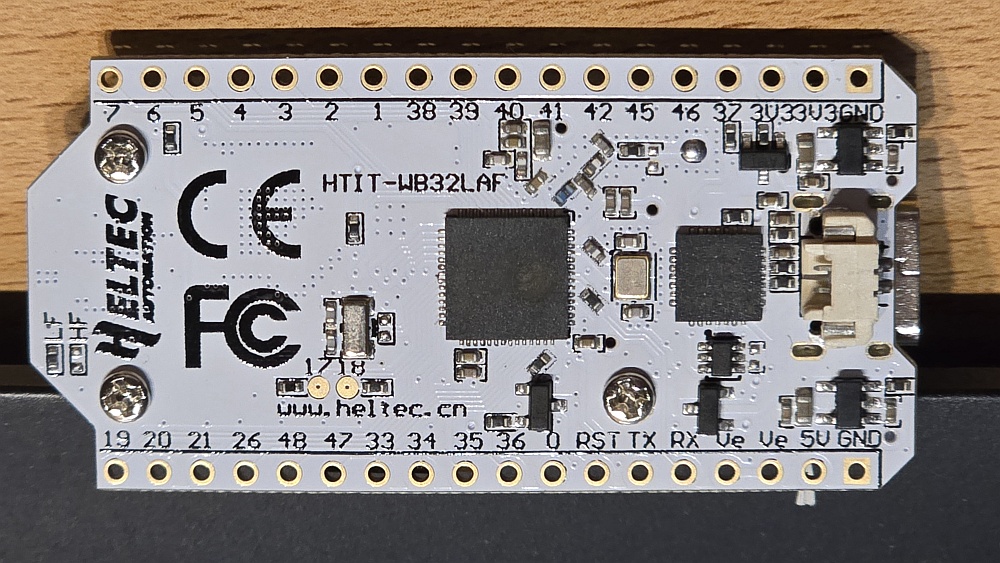
Last week I setup a small MesCom Node, consisting of a Heltec LoRa 32 Module (200mW output), based on ESP32 technology. A 5/8-Lambda omnidirectional antenna, 10W Solar panel, a Waveshare Solar Power Management Module and 4x 18650 (3.7V / abt. 15 Ah) battery. The battery capacity will be sufficient for safe operation even on gloomy winter days.
Further information can be found here (MesCom Map) or here (Institute of Citizen Science). The useful Meshtastic site planner is available here.
Alex, EA8DBM / LY3UM, has been a well-known VHF- and EME operator for a very long time. About two years ago, he started his “One Man DXPeditions” and has activated more than 20 DXCC entities over 23cm EME to date. This fall, Alex was active with his 2.4m foldable dish, initially from the Åland Islands as OH0/EA8DBM. From there, he traveled to Latvia (YL/EA8DBM) for a few days, then on to Lithuania, where Alex operated under his home call sign LY3UM. But this wasn’t enough, and he drove across Europe to the first 23cm activation from Albania (ZA/LY3UM). Even that wasn’t enough, so he went to Turkey for two nights, where he operated as TA1/EA8DBM. Many thanks to Alex for his endless effort and patience, and of course, four new countries for my log.
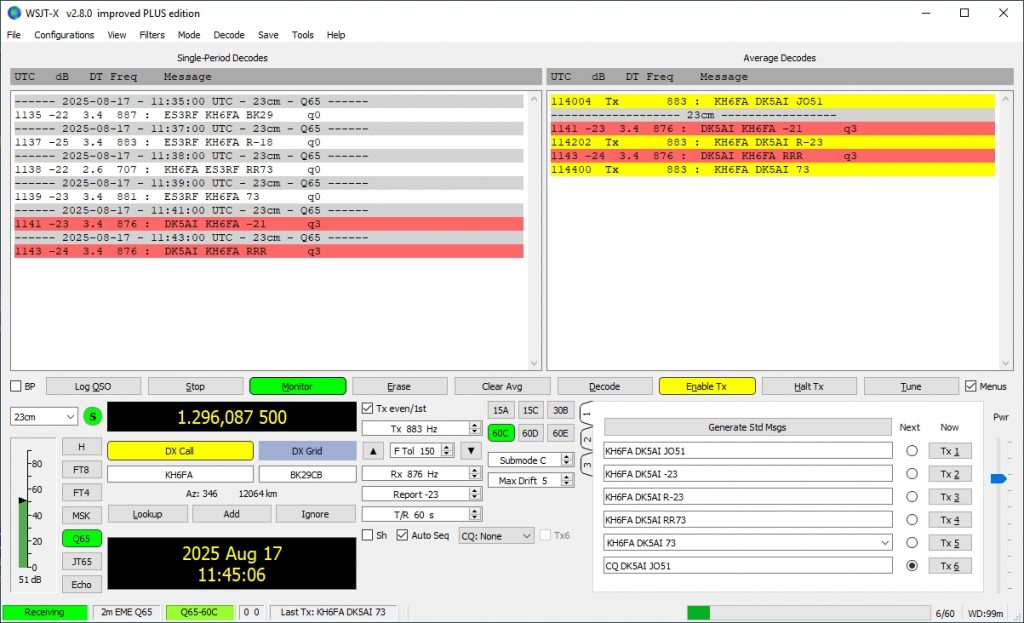
Working stations from Hawaii is always a thrill, no matter on what band. It is the mixed feeling of long distance and the exoticism of the tropical island. To made a contact with Hawaii is even more difficult, because there is only a very little time slot every month, when both stations see the moon. Today I get very lucky as I saw Frank, KH6FA, on the EME-Chat. He has a 3m mesh dish and a 400 W amplifier. After I asked him for a try, the contact was done strait forward with reports -23 / -21 exchanged. Great feeling and another DXCC in the bag.
Some Holiday fun from the Danish coastline. Reception of orbiting weather satellites on 137 MHz and 1.700 MHz. These weather satellites have an orbital altitide of approximately 820 km and a transmit power of 5-10 W EIRP (137 MHz) resp. 10-20 W EIRP (1.700 MHz). Equipment: V-dipole / 60cm Offset dish with SDRplay and low-noise preamp for 1.700 MHz.
There are a lot of further Informations about HRPT Reception on the web, this web page is very much recommended!
Nowadays, every household has at least one paper printer for everyday use. As a radio amateur, a 3D printer is also essential and helpful. I’d been toying with the idea of purchasing one for a long time, and now the time has come. Today, after a good four weeks, I can’t imagine life without it. Whether it’s a finished file from the internet that’s being printed, or a self-constructed housing, a mount, or a broken plastic part that needs to be reconstructed because it’s no longer commercially available.
Working via the moon on 23cm with my small, 1.75m diameter dish is possible, but sometimes difficult. Stations with a dish diameter of 3.0m and above were easy to work with, as were smaller ones down to 1.8m, provided they were optimally configured.
In recent months, the popularity of foldable 2.4m dishes has increased significantly. These antennas are equipped with a disc patch feed and a 90° hybrid coupler to provide circular polarization. To switch between LHCP and RHCP, a power relay and a set of cables are required. This combined effect causes noticeable losses. During EME experiments with such stations, I noticed that they are significantly weaker and less sensitive than comparable 2.4m stations equipped with septum feeds. For this reason, it was often very difficult, if not impossible, to complete a successful QSO with them.
1.75m solid Dish expanded to 2.35m
Therefore, I decided that it was time to enlarge my solid 1.75m dish. First, the parabola was calculated and a template was created for the new intended size. Enlarging the dish results in a reduction in the f/D (focus/diameter). As a compromise, I opted for a new diameter of 2.35m, which corresponds to an f/D of 0.31 (previously 0.38). Good illumination with the existing septum feed is still given. The calculated additional gain resulted 2.5 dB for received signals and about 5.0 dB for my own EME echoes.
After completing the expansion, solar noise measurements showed an increase of Sun noise between 2.5 and 3.0 dB, which corresponds to the calculations. This was also noticeable in practical operation; stations with folded 2.4m dishes as well as stations with Yagi antennas can now also be worked, provided they are well optimized.
A great, enjoyable afternoon and small JA3-EME-Meeting happened in Kyoto / Japan today with my friends (left to right) Taka-san JP3EXR (2m EME), Koji-san JE3GRQ (6m/2m EME), myself and Kay-san JH3AZC (2m/23cm EME).