Digital Amateur Television (DATV) via QO-100
Digital Amateur Television (DATV) is a mode of amateur radio communication that enables the transmission of live digital video and audio between licensed radio amateurs. On the geostationary QO-100 satellite, DATV is operated using the satellite’s dedicated wideband transponder, which provides sufficient bandwidth for digital television signals.
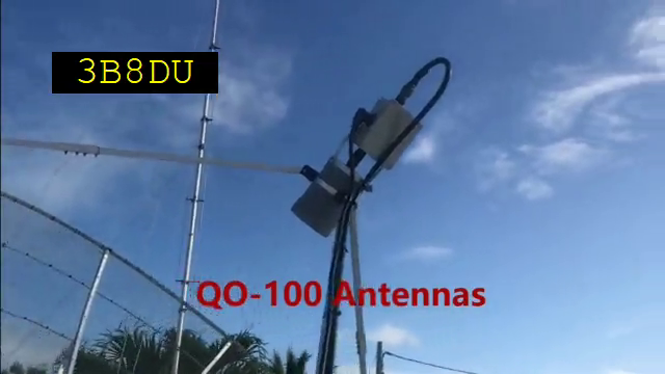
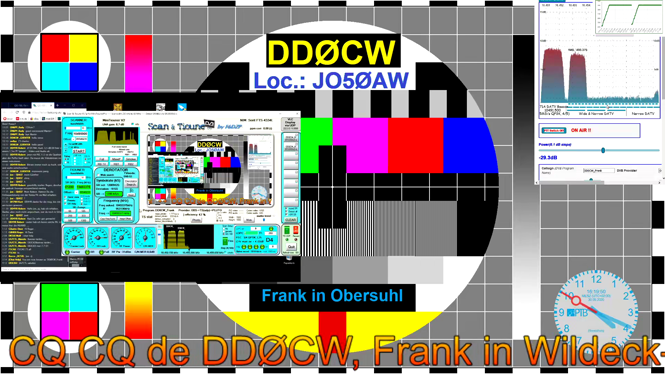
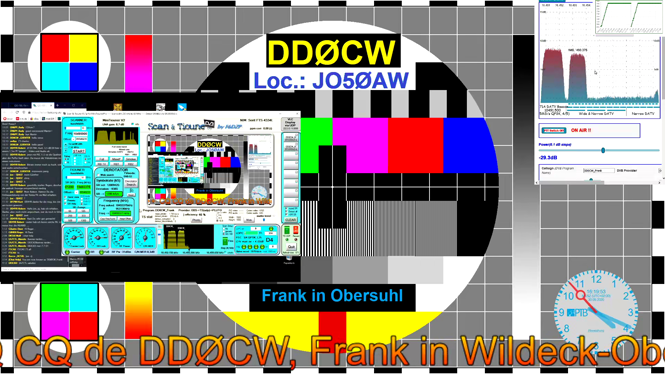
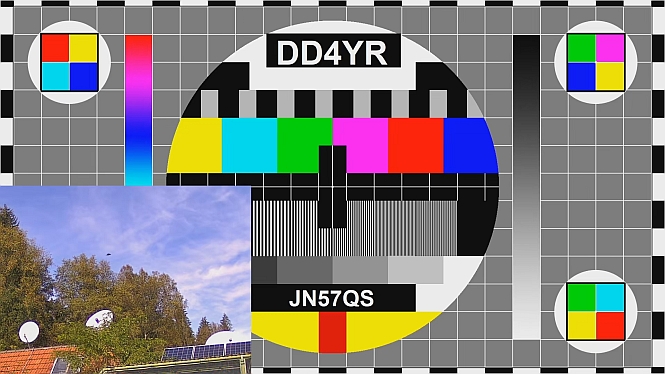
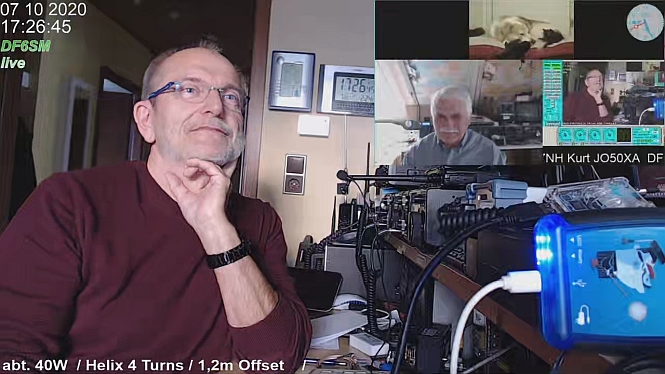
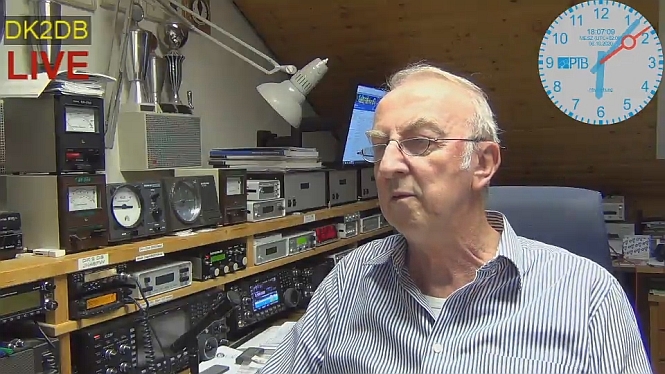
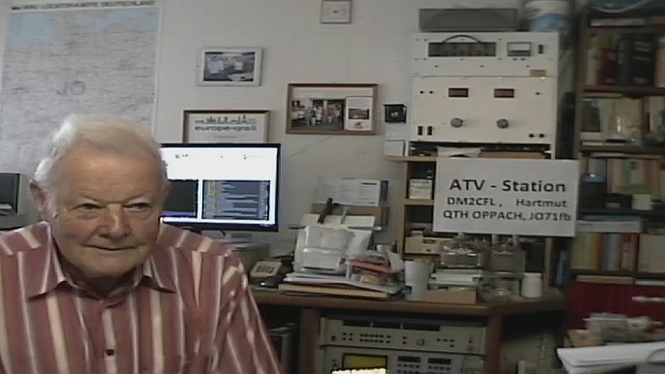
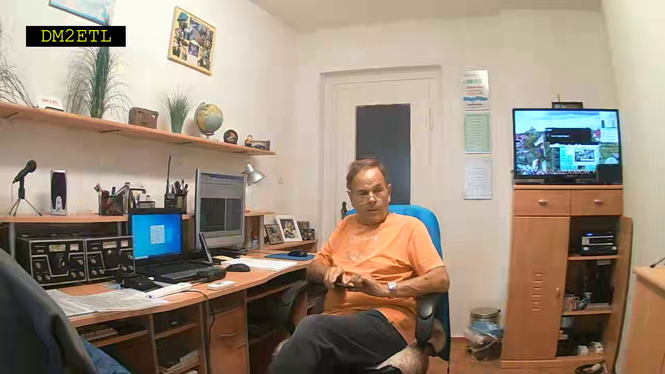
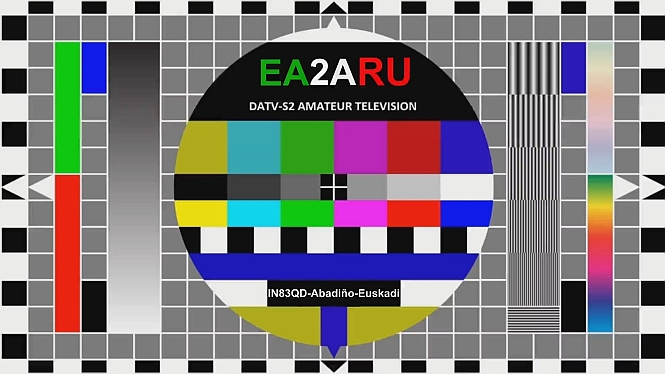
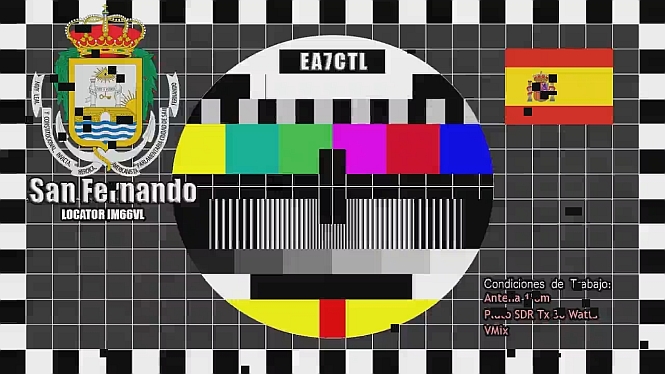
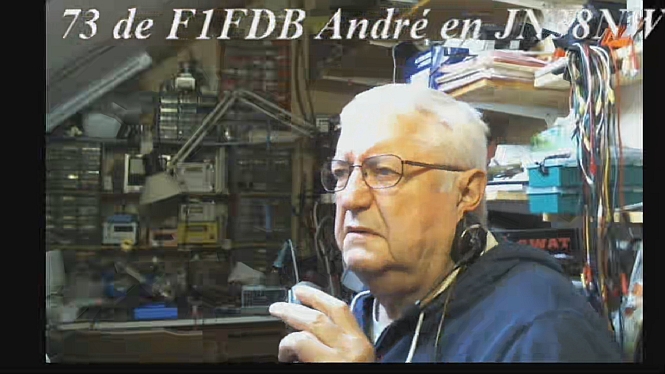
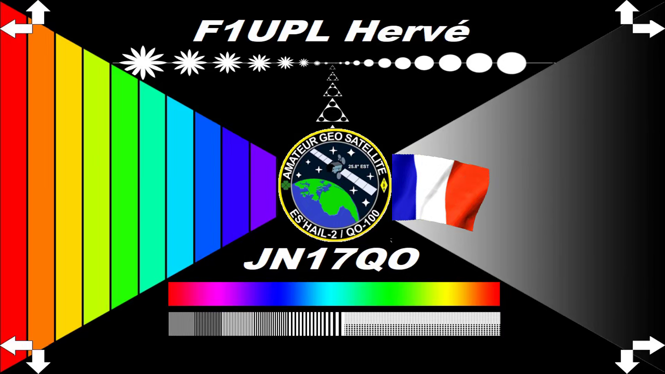
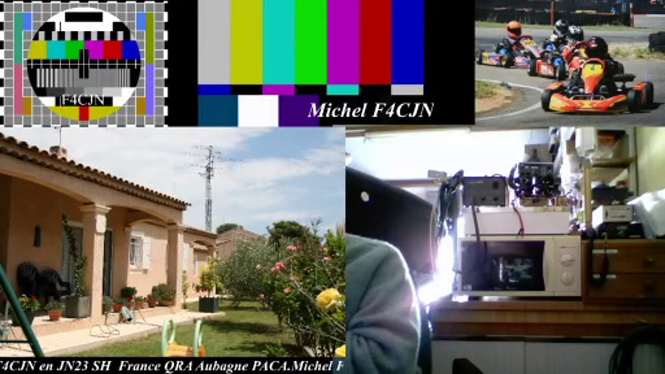
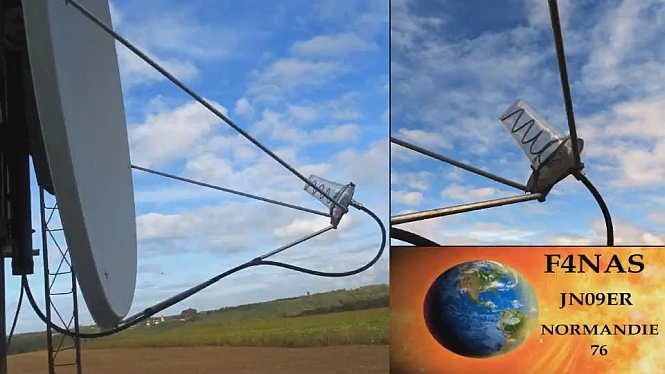
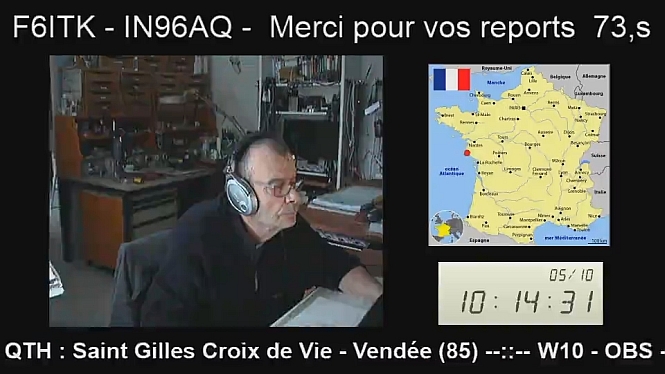
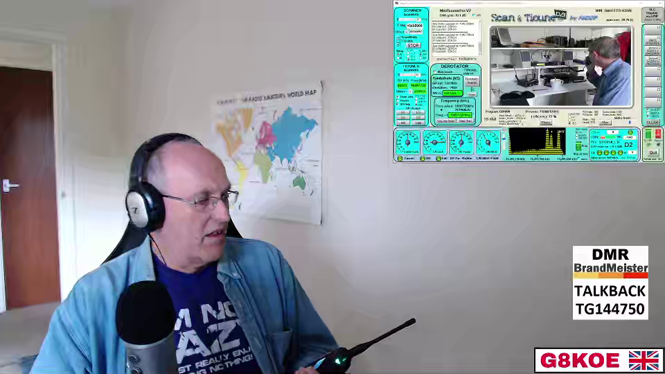
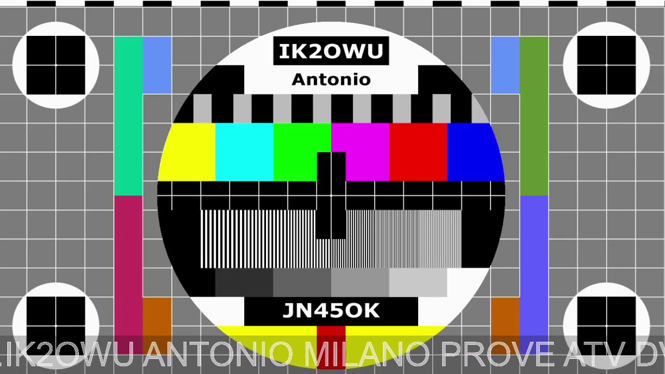
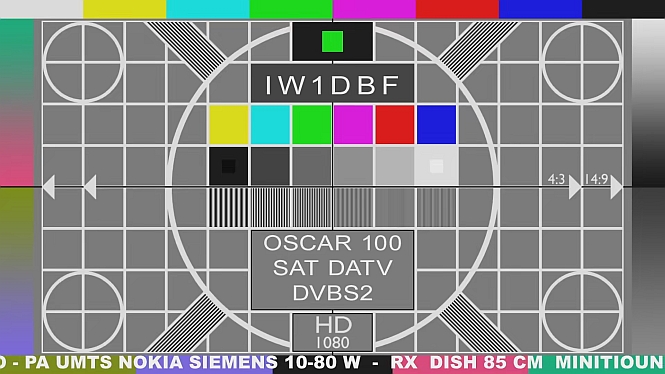
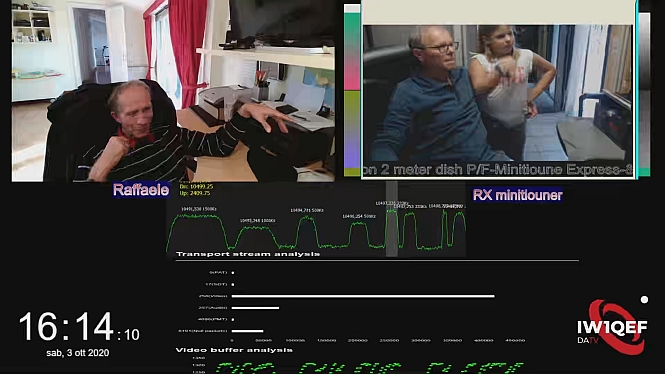
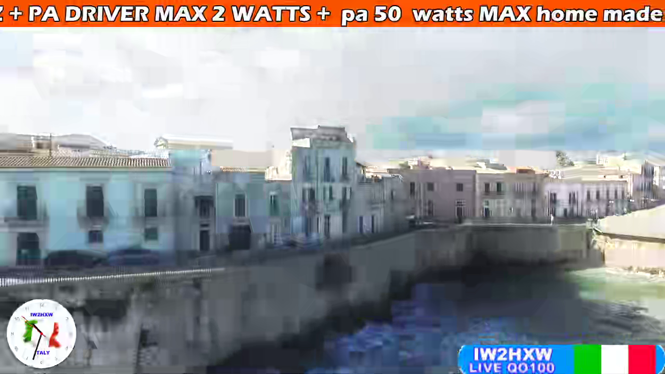
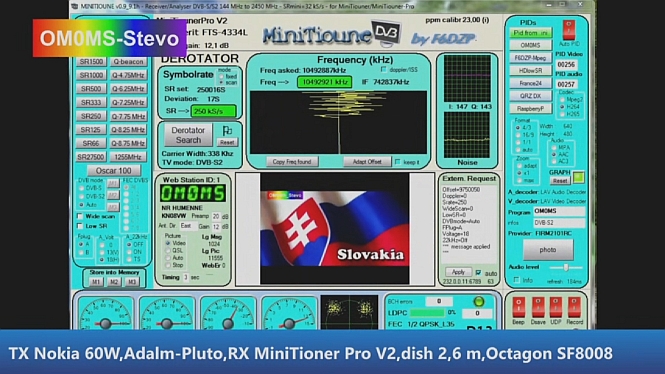
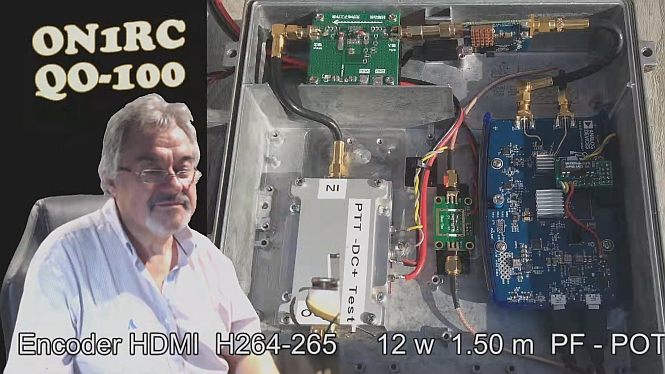
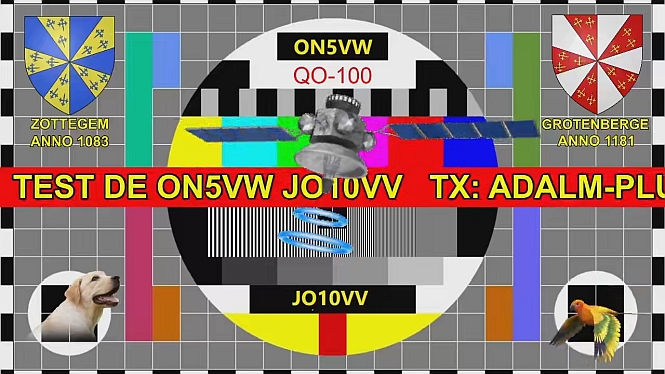
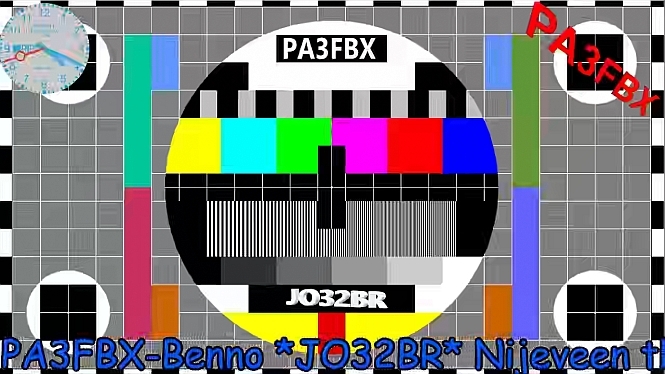
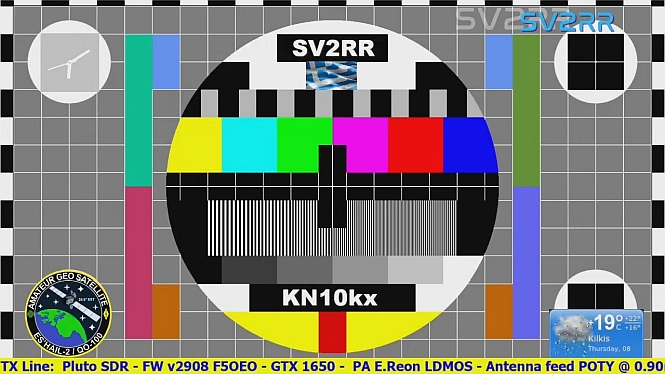
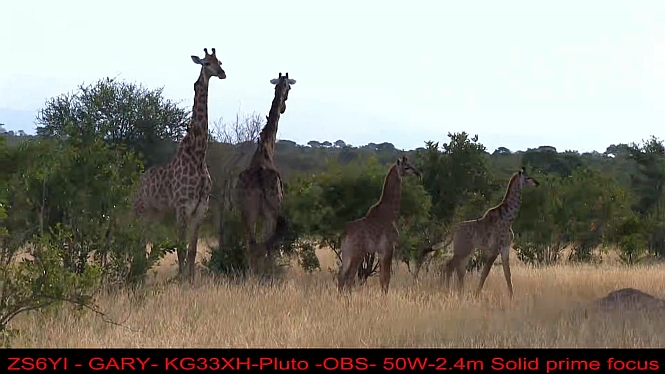
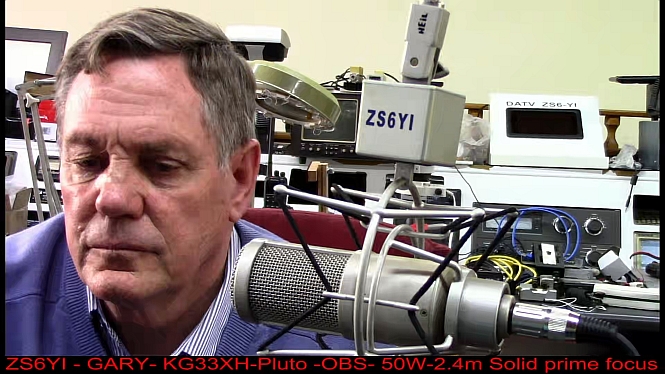
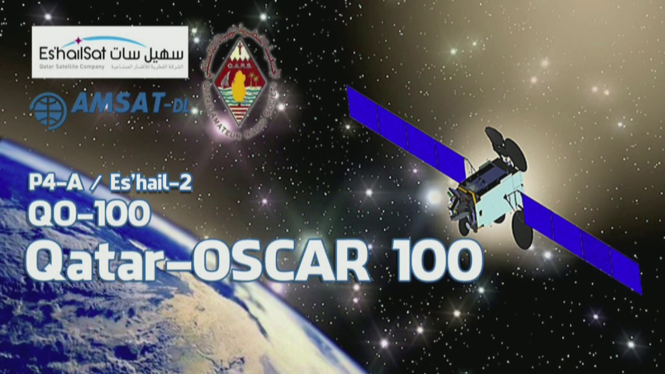
The following images were taken on the Quatar QO-100 satellite in DATV (Digital Amateur TV) mode. Equipment: LNB / MiniTioune Receiver 950 MHz / 1.75m Prime Focus Dish
Unlike conventional voice communication, DATV uses the DVB-S or DVB-S2 transmission standard, similar to commercial satellite television. Video from a camera is compressed, encoded into a digital transport stream, and modulated before being transmitted on the 2.4 GHz uplink. The QO-100 satellite receives the signal and retransmits it on the 10 GHz downlink, allowing all stations within the satellite’s coverage area to receive the transmission.
The required bandwidth depends primarily on the selected symbol rate and modulation scheme. Lower symbol rates reduce bandwidth and required transmit power but also limit image quality, whereas higher symbol rates provide improved video quality at the expense of increased bandwidth.
A typical DATV station consists of a camera, a video encoder or computer, an SDR transceiver, a 2.4 GHz power amplifier, and a directional dish antenna. On the receiving side, a satellite dish with an LNB and a DVB-S2-compatible receiver or SDR are used to decode the transmitted video stream.
DATV on QO-100 is widely used for live demonstrations, technical presentations, and two-way video contacts (video QSOs), providing amateur radio operators with a practical platform for real-time digital television communication.